AI systems & workflows

Research pipelines, shared knowledge, live assistance, and AI features inside working products. The work connects models to source information, application tools, and records that persist beyond a single response.

Across products and internal tools

Selected implementations from separate projects. Each workflow below summarizes its part of the work.

Research and monitoring

Turn scattered sources into work someone can review.

A business research tool gathers website findings into company records, scores them against defined criteria, and keeps the rationale with the record. A separate research pipeline monitors selected sources and updates a running notebook as new information arrives.

  1. Search and source pages
  2. Structured findings
  3. Reviewable records

Claude · Tavily · Browser automation · SQLite
Knowledge and continuing work

Keep context useful after the conversation ends.

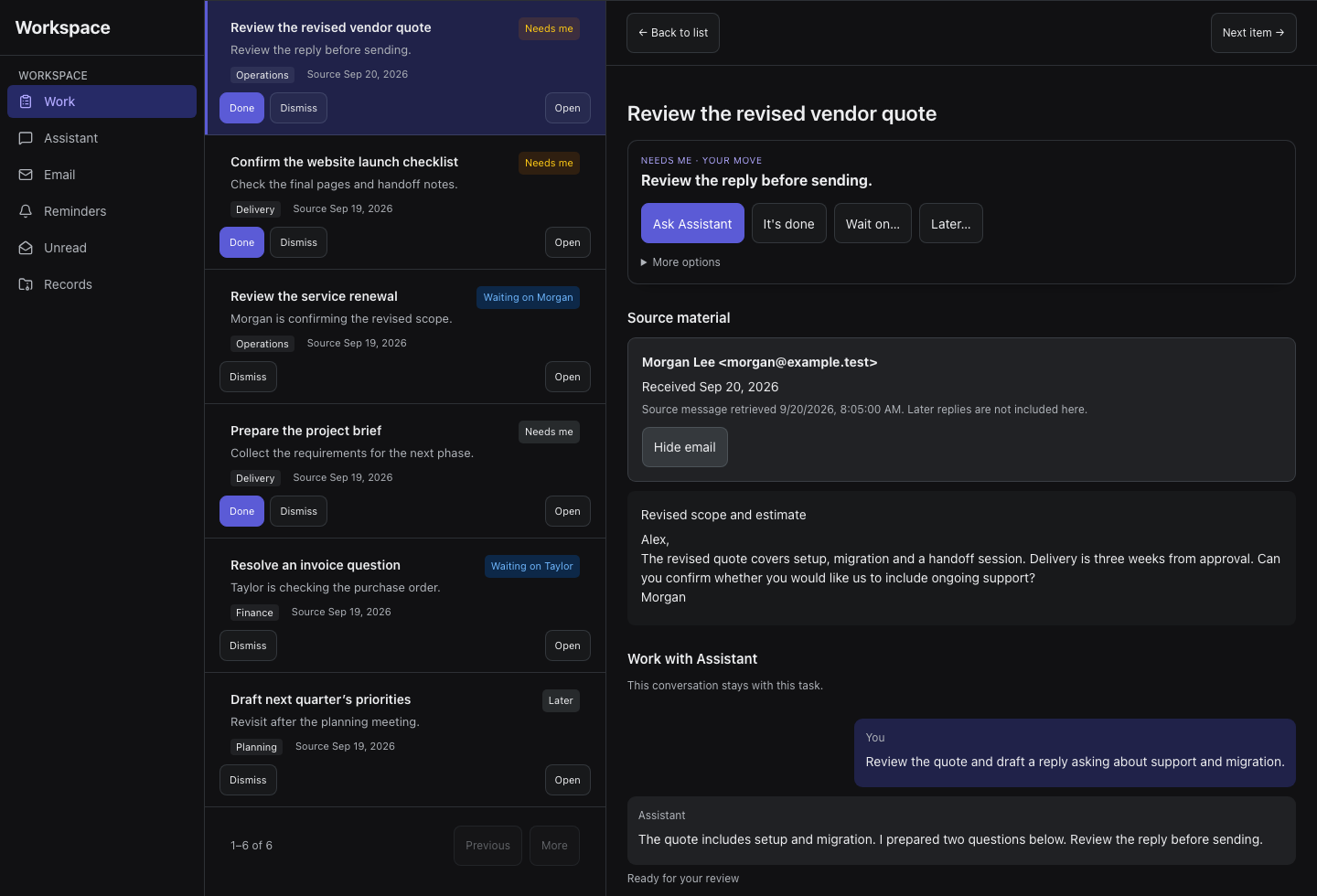
An assistant keeps sources, drafts, decisions, and follow-up attached to a task. A separate collaboration tool turns conversations into searchable briefs and decisions, with retrieval that favors the current project. The two use different approaches to memory.

Inside the assistant and workspace
  1. Conversations and sources
  2. Tasks and shared context
  3. Retrieve and continue

Claude Agent SDK · Graphiti / Neo4j · Local embeddings / sqlite-vec

Live audio and assistance

Connect a live conversation to useful assistance.

An internal meeting tool streams audio into a transcript and offers optional AI coaching. Decisions and action items link back to transcript evidence, while suggestions remain separate. Transcription can run locally or in the cloud; coaching uses the chosen cloud model.

  1. Live audio
  2. Streaming transcript
  3. Evidence-linked assistance

Whisper · Deepgram · Anthropic / OpenAI

AI inside a product

Make the output part of an application.

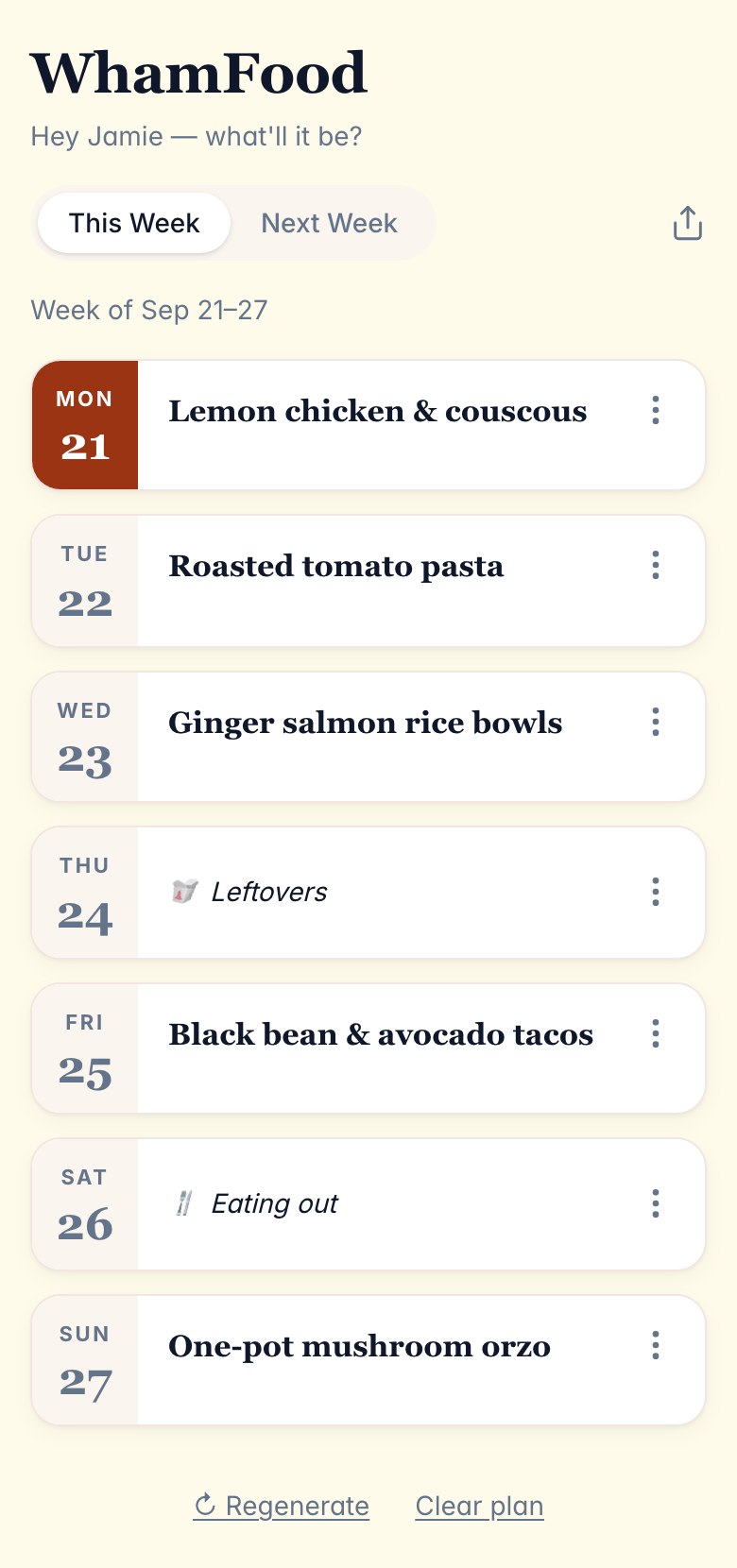
WhamFood turns text, photos, pages, and video transcripts into editable recipe records. Conversation connects to saved recipes, meal plans, and grocery lists through application tools. Extraction, tool results, and provider usage are handled separately.

See the product workflow
  1. Text, images and video
  2. Structured extraction
  3. Saved application records

Claude · Supadata · Tavily · SQLite

Tools and integrations

Give agents a way to deliver usable work.

Whamlink exposes publishing and updates through an API and Model Context Protocol (MCP) tools. An assistant can publish a report or dashboard, revise it without changing the link, and manage access. This is application infrastructure that agents can use.

See the publishing platform
  1. Generated report or tool
  2. Authenticated API / MCP
  3. Published, revisable output

MCP · Application API · Cloudflare R2 / Workers

Generation pipelines

Carry generated output through to a usable asset.

An internal code-generation tool checks output against a reusable runtime and runs it in a restricted browser sandbox. A separate creative workflow connects image generation to 3D generation, then optimizes geometry and textures for use in an application.

  1. Prompt or reference
  2. Generate and check
  3. Runtime or application asset

Claude · Gemini · Meshy · Deterministic validation and optimization

Implementation

The model is one part of the system. The surrounding work determines what it can read, which tools it can use, what gets saved, and where a person needs to review the result.

Tools, providers, and implementation details
Research and extraction
Claude coordinates research and structured extraction. Tavily supplies web search and page content; Supadata supplies video metadata and transcripts. Browser automation handles pages that need interaction. Records retain source references and run state.
Two approaches to memory
The assistant integrates Graphiti and Neo4j for source-attributed facts and time context, with OpenAI extraction and embeddings. The separate collaboration tool uses local MiniLM embeddings through Transformers.js and sqlite-vec for semantic retrieval.
Audio and coaching
Whisper supports local transcription; Deepgram supports streaming cloud transcription. Anthropic or OpenAI models provide optional coaching from transcript text. The coaching component suggests and records work; it has no tools for sending or scheduling actions.
Product tools and publishing
WhamFood separates Claude extraction from conversational tool use and stores application records in SQLite. Whamlink provides authenticated MCP/API operations, with artifact storage and isolated content delivery through Cloudflare R2 and Workers.
Code and creative assets
Claude generates code against a defined runtime, with syntax and interface checks, revision history, and usage accounting. A separate pipeline uses Gemini for reference-guided images and Meshy for 3D generation, followed by geometry and texture optimization. Code checks do not establish that generated behavior is correct.
Checks around the model
The implementations include structured response validation, source references, retries, cost limits, and recorded tool results. In the assistant, scenario evaluations exercise task, draft, and approval behavior against fabricated providers. These checks support review; they do not establish measured business outcomes.

Contact

What are you working through?

hello@outermost.us