Separate content from the app.
Published artifacts are served from a separate origin with a sandbox policy. The viewer and content-serving path enforce access rules, keeping artifact execution separate from the application session.
Product engineering
A publishing system for the things people and AI tools create.
Built and operated by Outermost
Product development · Publishing infrastructure · AI integrations
Visit WhamlinkScroll across to explore the interface.
View full-size screenshot →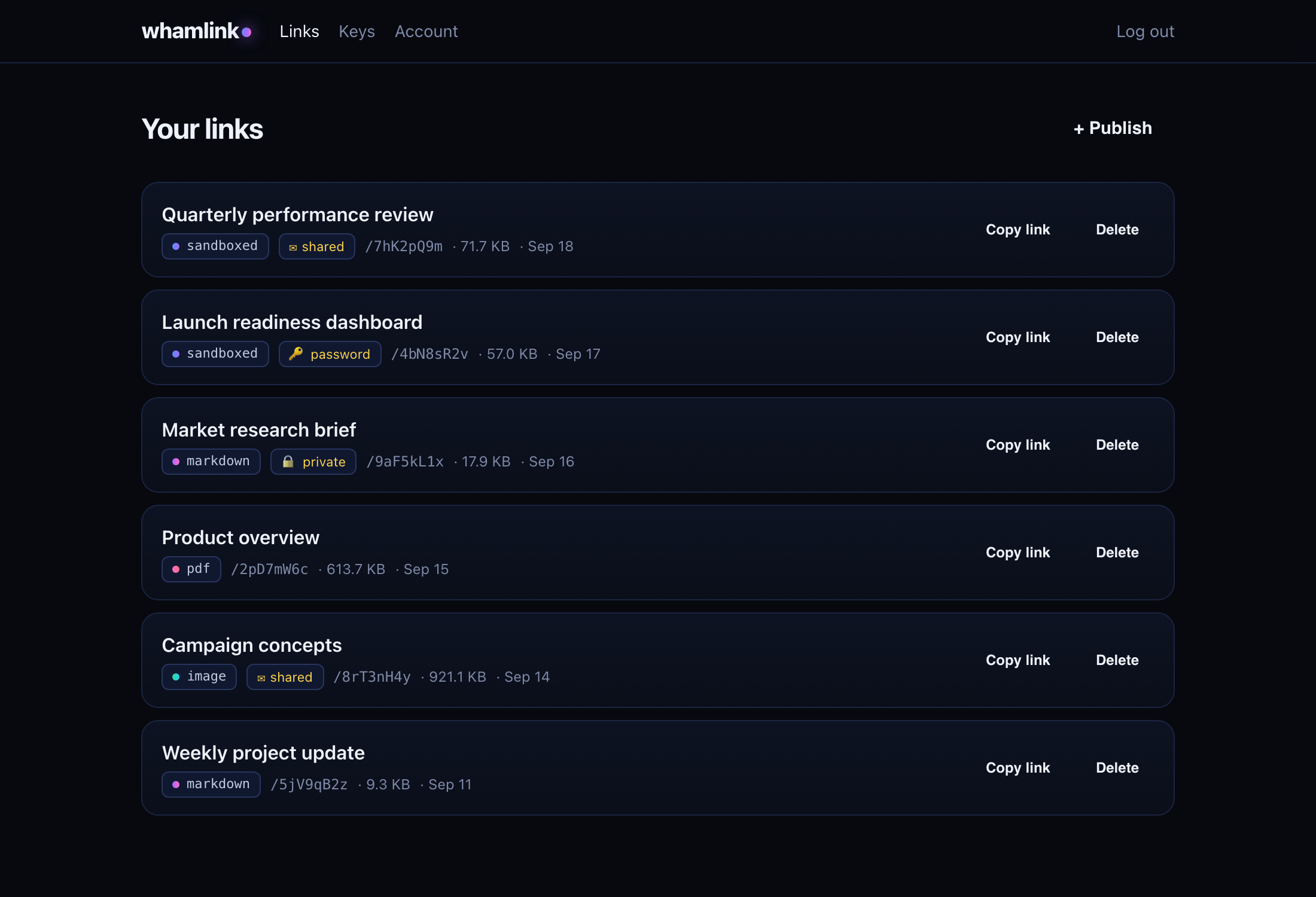
The product
Reports, dashboards, documents, and interactive pages get a stable link, content updates, and access controls. Publishing works through a web dashboard, a command-line tool, and integrations for AI assistants.
The dashboard brings published artifacts, access settings, and link management together. It gives the output of a script or AI conversation a place to live beyond that session.
Replacing an artifact creates a new revision behind its existing link. Viewers receive the current content through the content-serving layer.
System architecture
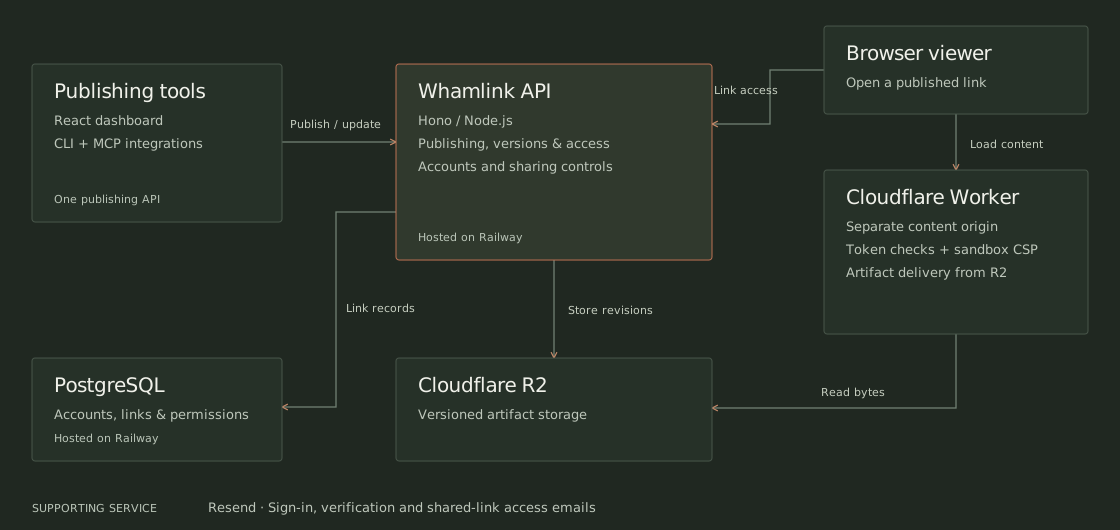
Publish through the dashboard, CLI, or MCP. The application manages the link; the content-serving layer delivers the saved artifact.
The React dashboard, CLI, and MCP integrations use the same publishing API.
A Hono application manages accounts, links, revisions, and access rules. PostgreSQL stores their records.
The application stores replacement content under a new object key. The sharing link stays the same.
The browser loads artifacts from a separate origin. The Worker verifies content tokens for restricted links and retrieves bytes from R2.
Email supports sign-in, verification, and access to restricted shared links.
Engineering decisions
Published artifacts are served from a separate origin with a sandbox policy. The viewer and content-serving path enforce access rules, keeping artifact execution separate from the application session.
A stable sharing URL points to the current artifact revision. Versioned object keys in R2 let the content change without reusing cached bytes from an earlier upload.
The dashboard, CLI, API, and MCP integration connect to the same publishing system. AI tools can publish and update artifacts while people manage their links and sharing settings in the web interface.
What would you like to build or improve?
hello@outermost.us